
Enslaved Africans’ Rain Garden
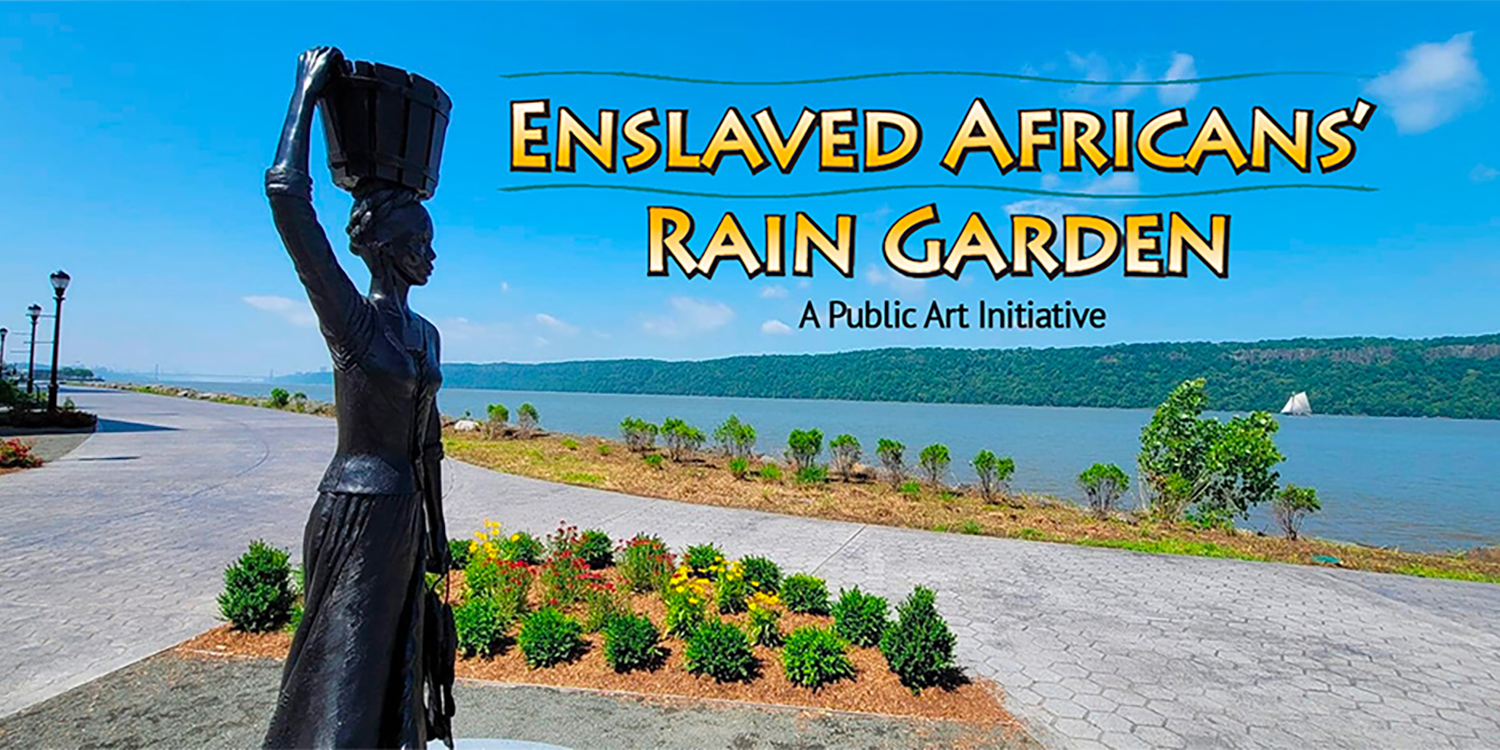
Challenge
A story that must be told
Located on the banks of the Hudson River, the Enslaved Africans Rain Garden honors five enslaved Africans who were among the first to be freed by law—64 years before the Emancipation Proclamation. The challenge was to build awareness and financial support for an ambitious public-art project while communicating its history, humanity, and cultural significance to a broad audience.
Strategy
Turning a powerful story into a campaign people could see, understand, and support.
Rather than presenting the Rain Garden simply as a monument, I focused the campaign on the people and stories behind it. Vinnie Bagwell’s five larger-than-life bronze sculptures became the emotional center, supported by the project’s history, environmental design, and educational mission. The strategy transformed a fundraising campaign into something larger: an invitation to discover a story that had gone untold.
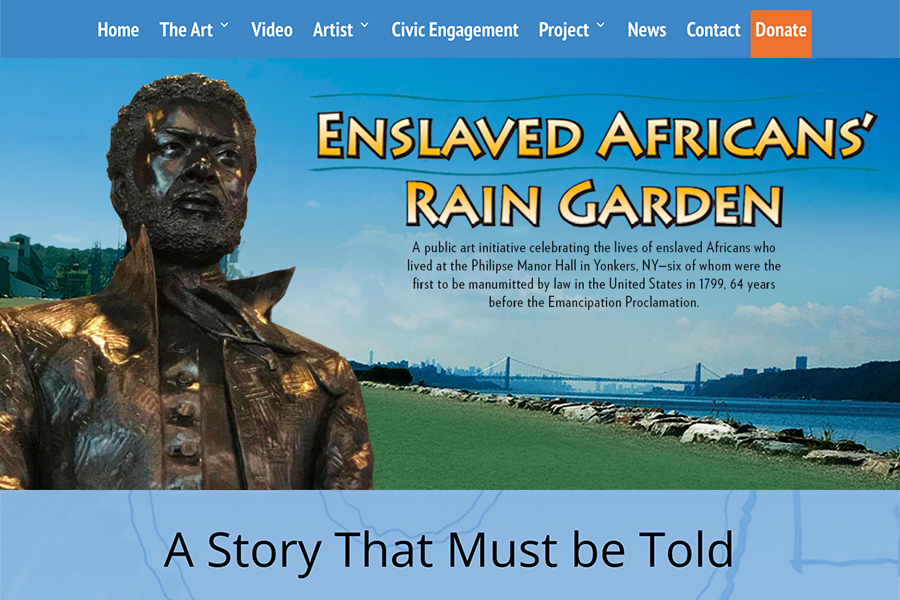
The homepage brings past, present, and future together in one cinematic image: a newly freed African overlooking the Hudson River and New York City beneath the headline, “A Story That Must Be Told.”
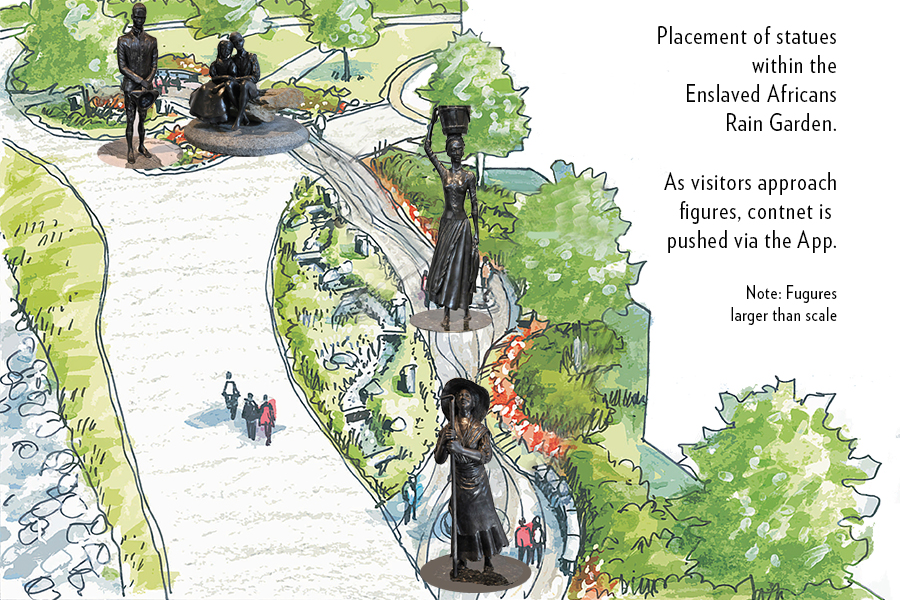
The Rain Garden is designed as an immersive experience. Visitors encounter each sculpture along a central path, while a downloadable app provides videos and backstories that bring each figure to life and collectively tell the story of life along the Hudson in pre-Revolutionary America.
Execution
Giving Each Figure a Voice
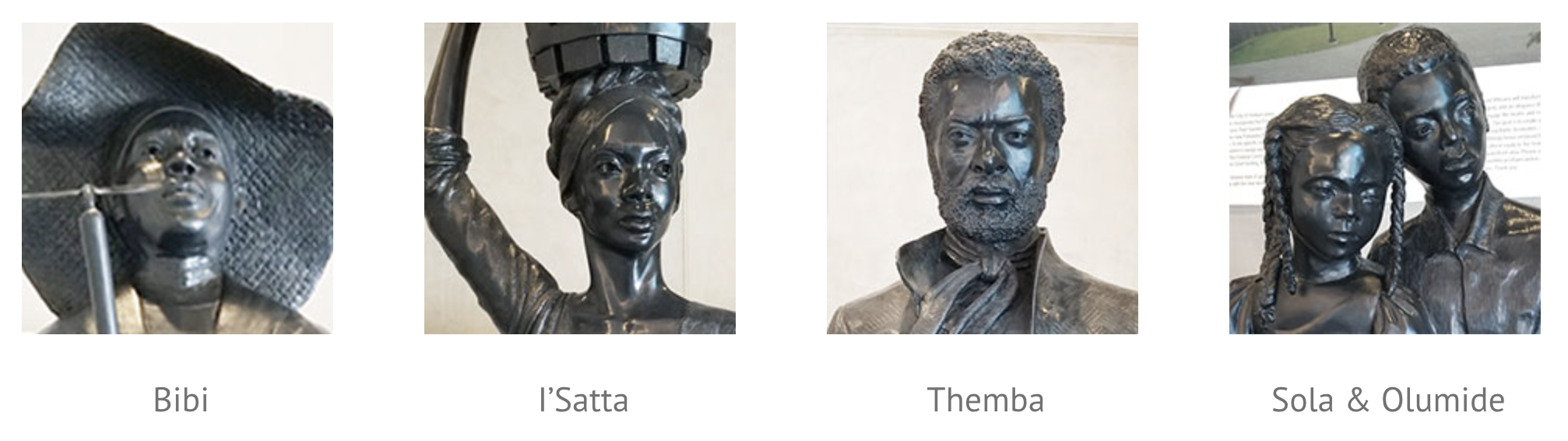
Each of Vinnie Bagwell’s five bronze sculptures represents a different facet of the African experience along the Hudson. We built the campaign around those individual stories, using the figures across the website, social media, video, and fundraising materials. Rather than presenting the sculptures simply as works of art, each became a character with a history—giving visitors a personal connection to the people and events the Rain Garden commemorates.
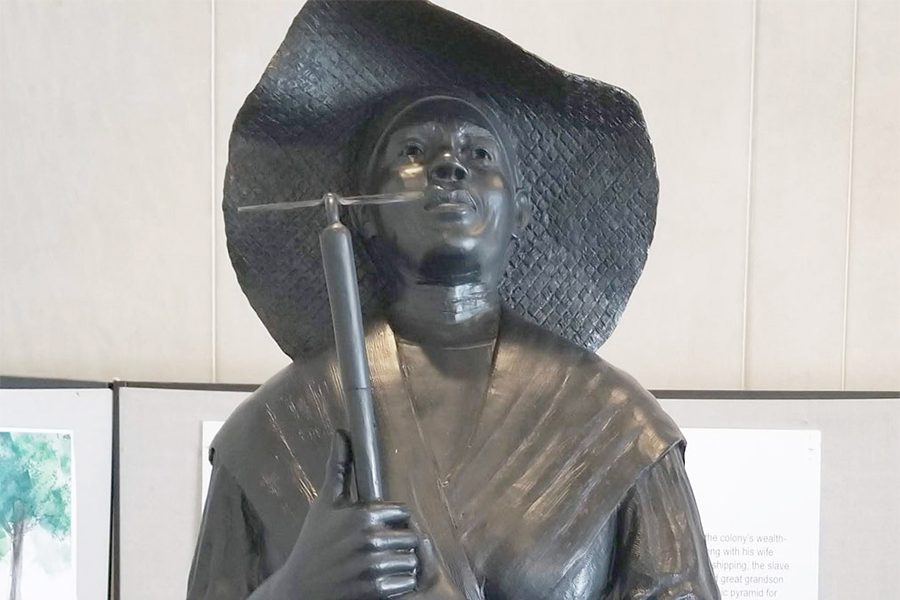
Bibi represents the elders among the enslaved Africans. Depicted as a gardener, she pauses from her work to pray, looking skyward. Her name reflects the languages of the places from which enslaved Africans came.
Each bronze figure is brought to life through pictures, words, and music—transforming the Rain Garden from a sculpture park into a living archive of the enslaved Africans who lived along the Hudson.
Outcome
The Story Has a Permanent Home
The campaign helped give the Enslaved Africans’ Rain Garden a public identity, building awareness and support while the project was still taking shape. In June 2022, the Rain Garden was officially unveiled on the Yonkers waterfront. The completed project received a Westchester Municipal Planning Federation Award for educating the public about local and national history and is now a stop on the African American Heritage Trail of Westchester County.



Michael Pilla Strategist · Designer · Author | Author of You Oughta Be In Business »
© 2026 NoNonsense.Design · Privacy Policy